I’ve been drawing professionally for over 6+ Years, and I still face that paralyzing moment when I sit down with a blank page and think, “what should I draw?” If you’ve ever experienced this creative paralysis, you’re not alone. It’s one of the most common struggles artists face, regardless of skill level.
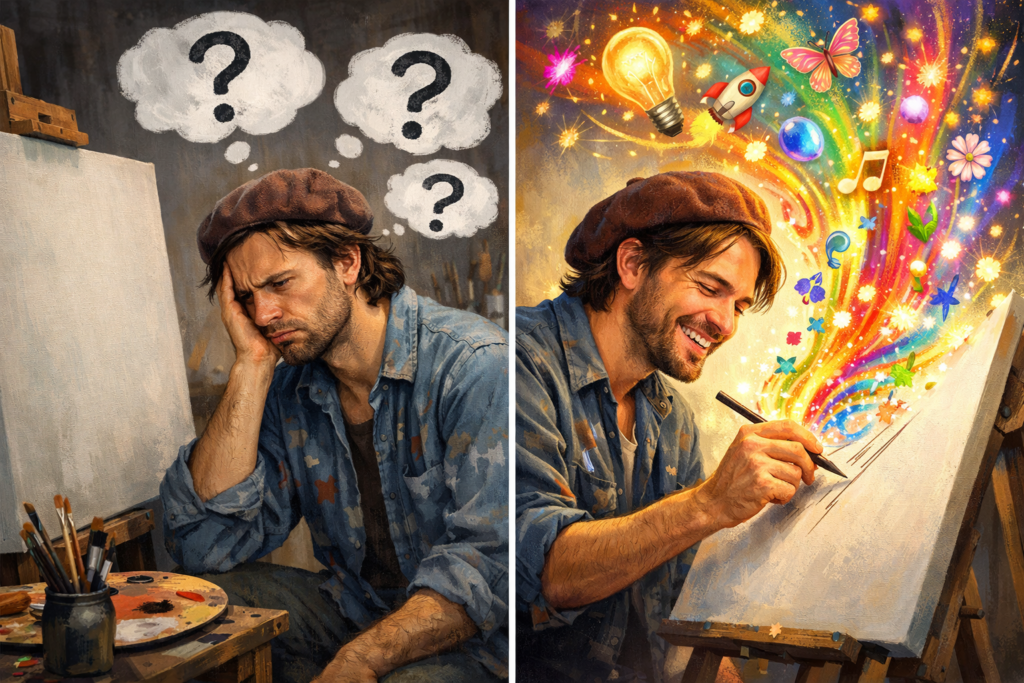
The blank canvas can feel intimidating–like it’s judging you before you even make the first mark. But here’s what I’ve learned through years of professional illustration work: the problem isn’t a lack of creativity. It’s decision overload. When you have infinite possibilities, choosing just one becomes overwhelming.
That’s exactly why I created this comprehensive guide filled with over 150 drawing prompts. Whether you’re a complete beginner wondering what should I draw to practice fundamentals, or an experienced artist seeking fresh inspiration, you’ll find ideas that resonate with your current skill level and creative goals.
Understanding Why “What Should I Draw?” Becomes a Daily Question
Before we dive into specific drawing prompts, let’s address why this question haunts so many artists. According to research from the University of California, Berkeley, creative professionals experience decision fatigue more intensely than others because their work requires constant judgment calls about aesthetic choices.
When you’re constantly asking yourself what should I draw, you’re actually dealing with what psychologists call “choice paralysis.” Barry Schwartz, author of The Paradox of Choice, explains that having too many options can lead to anxiety and dissatisfaction. This directly applies to artists facing an empty sketchbook.
The Psychology Behind Creative Blocks
Throughout my career working with illustration students and professional artists, I’ve identified three primary reasons people struggle with what should I draw:
Analysis Paralysis: You want every drawing to be “good,” so you overthink before starting.
Comparison Culture: Social media exposes you to thousands of incredible artworks daily, making your ideas feel inadequate.
Perfectionism: You’re waiting for the “perfect” idea instead of practicing with “good enough” concepts.
The solution? Drawing prompts that remove the decision-making burden while still allowing creative expression.
Essential Drawing Prompts for Absolute Beginners
If you’re just starting your artistic journey and constantly wondering what should I draw, these foundational prompts will build your skills while keeping frustration low.
Basic Object Studies
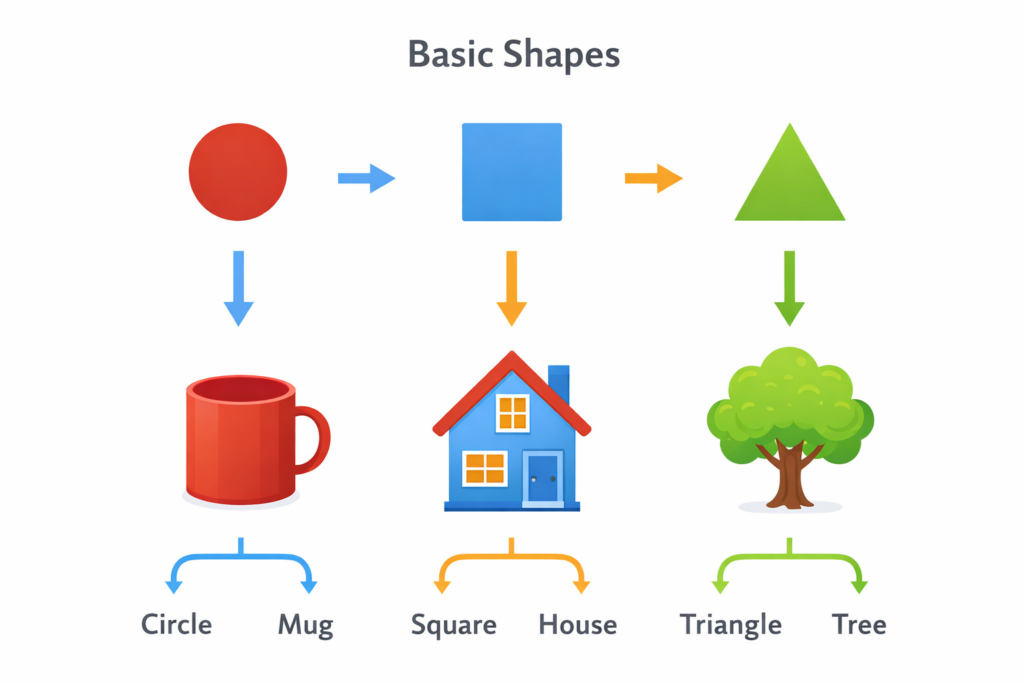
When considering what should I draw as a beginner, simple household objects are your best friends. These drawing prompts teach you fundamental skills:
- Draw a coffee mug from three different angles – This teaches perspective and observation skills
- Sketch your favorite pair of shoes – Shoes have complex forms that improve your understanding of volume
- Draw a houseplant with detailed leaves – Organic forms teach you to see subtle variations
- Illustrate a stack of books – Rectangular forms are perfect for understanding proportion
- Sketch kitchen utensils – Spoons, forks, and knives teach you about reflective surfaces and curves
Geometric Shape Challenges
Before you stress about what should I draw, master these shape-based drawing prompts:
- Create a composition using only circles – Constraint breeds creativity
- Draw overlapping squares at different angles – This develops spatial reasoning
- Sketch cylinders with proper shading – Understanding form is foundational
- Combine basic shapes to create a robot – This makes geometry fun
- Draw a cityscape using only rectangles and triangles – Simplification teaches you to see underlying structures
Intermediate Drawing Prompts That Challenge Your Skills
Once you’ve mastered basics, the question “what should I draw” becomes about growth and variety. These drawing prompts push you beyond your comfort zone.
Character Design Ideas
Character work answers what should I draw when you want narrative depth:
- Design a fantasy character based on your favorite animal – Combining elements develops imagination
- Create a superhero whose power relates to your profession – Personal connection makes drawing more engaging
- Draw yourself as a character in your favorite video game – This practices self-portraiture with a twist
- Illustrate an elderly person with a mysterious past – Age brings character to faces
- Sketch twins with opposite personalities – Contrast teaches visual storytelling
- Draw a character entirely in silhouette – This emphasizes shape design
- Create a character using only circular shapes – Constraints force creativity
- Design a villain you’d secretly root for – Complexity makes characters interesting
- Draw a barista who’s secretly a wizard – Mundane meets magical
- Illustrate a historical figure in modern clothing – Time period mashups are excellent practice
Environmental Sketching
When pondering what should I draw to improve observation, your surroundings provide endless material:
- Sketch the corner of your room from where you’re sitting – Immediate reference builds confidence
- Draw the view from your window at different times of day – Lighting studies are invaluable
- Illustrate your local coffee shop’s interior – Public spaces teach you about atmosphere
- Sketch trees in your neighborhood – Organic forms are challenging and rewarding
- Draw the dashboard of your car – Familiar objects from unusual angles
- Illustrate your workspace with all its clutter – Honest observation improves technical skills
- Sketch architectural details of a nearby building – This develops precision
- Draw the contents of your refrigerator – Still life without formal setup
- Illustrate your garden or local park – Nature provides composition lessons
- Sketch people at a bus stop – Quick gesture drawing in real contexts
According to research published in the Journal of Cognitive Enhancement, regular observational drawing significantly improves visual memory and attention to detail—skills that benefit artists across all disciplines.
People Also Loving These: 150+ Powerful Journal Prompts to Transform Your Daily Writing Practice
People Also Loving These: 200+ Creative Drawing Prompts to Transform Your Art Skills in 2026
Advanced Drawing Prompts for Experienced Artists
If you’re an established artist asking what should I draw to stay challenged, these sophisticated drawing prompts will test your abilities.
Conceptual and Abstract Ideas
Complex concepts answer what should I draw when you want depth:
- Visualize the emotion “nostalgia” without using people – Abstract emotions require symbolic thinking
- Draw what your favorite song sounds like – Synesthesia-based drawing prompts are fascinating
- Illustrate the concept of time passing – Philosophy meets visual art
- Create a visual metaphor for growth – Symbolism strengthens your conceptual skills
- Draw silence – Negative space becomes the subject
- Illustrate a memory fading – Blur, distortion, and incompleteness as intentional choices
- Visualize the taste of your favorite food – Cross-sensory translation
- Draw the feeling of a storm approaching – Atmospheric tension without obvious imagery
- Illustrate the space between words – Typography and meaning
- Create a visual representation of an echo – Repetition and decay as artistic elements
Technical Challenge Prompts
When you’re considering what should I draw to master technique, these drawing prompts target specific skills:
- Draw glass objects with complex reflections – Transparency and light behavior
- Illustrate wet fabric clinging to a form – Water adds complexity to material rendering
- Sketch metallic surfaces in bright sunlight – Extreme highlights and reflections
- Draw a detailed close-up of an eye – Precision and patience
- Illustrate flowing water – Motion and transparency combined
- Sketch intricate architectural details – Accuracy and perspective
- Draw translucent materials like jellyfish – Subsurface scattering on paper
- Illustrate complex machinery – Technical drawing meets creativity
- Sketch weathered textures – Age and deterioration as beauty
- Draw multiple light sources creating complex shadows – Advanced understanding of light
Creative Drawing Prompts That Spark Imagination
Sometimes what should I draw needs to be less technical and more playful. These imaginative drawing prompts reconnect you with creative joy.
Fantasy and Sci-Fi Scenarios
- Draw a dragon that collects something unexpected instead of treasure – Subverting tropes
- Illustrate a spaceship designed by ancient civilizations – Anachronistic mashups
- Sketch a magical library where books have wings – Whimsy meets architecture
- Draw a robot learning to garden – Technology meets nature
- Illustrate an underwater city – Environmental reimagining
- Sketch a forest where the trees are made of crystals – Material substitution
- Draw portals to different dimensions in everyday locations – Mundane meets extraordinary
- Illustrate a marketplace in a cloud city – Fantasy worldbuilding
- Sketch mythological creatures as modern pets – Scale and context shifts
- Draw what aliens might look like if they evolved from plants – Biological speculation
Combination and Mashup Prompts
When you’re stuck on what should I draw, combining unexpected elements creates fresh ideas:
- Combine your two favorite animals into one creature – Hybrid design challenges
- Draw a household appliance as a fantasy weapon – Function reimagined
- Illustrate a food item as a building – Scale and material transformation
- Sketch a vehicle made entirely of natural materials – Organic technology
- Draw musical instruments as characters – Personification exercises
- Combine different historical periods in one scene – Temporal collage
- Illustrate seasons merged into one landscape – Impossible environments
- Draw your favorite movie as if it were from a different genre – Tone shifting
- Sketch common objects at dramatically wrong scales – Size distortion for effect
- Combine elements from three different cultures – Cross-cultural synthesis
Daily Drawing Prompts for Consistent Practice
The question “what should I draw” becomes less daunting when you have a reliable system. These drawing prompts work for daily practice routines.
Quick 15-Minute Sketches
- Draw your hand in an interesting pose – Always available reference
- Sketch what’s in your pocket or bag – Personal inventory studies
- Illustrate today’s weather – Atmospheric practice
- Draw your breakfast – Food sketching builds observation
- Sketch the person sitting across from you – Figure drawing in context
- Draw shadows cast by objects near a window – Light study
- Illustrate a single flower in detail – Botanical precision
- Sketch wrinkles in fabric – Texture and form
- Draw reflections in a spoon – Distortion practice
- Illustrate one architectural detail – Fragment studies build skills
Weekly Challenge Prompts
When planning what should I draw across a week, thematic series keep you engaged:
- Monday: Draw something red – Color-focused observation
- Tuesday: Illustrate something that flies – Motion and form
- Wednesday: Sketch something from nature – Organic studies
- Thursday: Draw something mechanical – Precision and construction
- Friday: Illustrate a portrait – Human connection
- Saturday: Draw something abstract – Conceptual freedom
- Sunday: Sketch your favorite thing from the week – Reflection and refinement
Themed Drawing Prompts for Specific Interests
Knowing what should I draw becomes easier when you align prompts with your passions.
For Nature Lovers
- Draw the same tree through all four seasons – Long-term observation project
- Illustrate a tide pool ecosystem – Biological detail work
- Sketch birds in motion – Gesture and anatomy
- Draw different cloud formations – Atmospheric study
- Illustrate mushrooms and fungi varieties – Unusual organic forms
- Sketch animal tracks in various terrains – Negative space storytelling
- Draw a detailed insect – Macro observation skills
- Illustrate a landscape at different times of day – Lighting progression
- Sketch roots and underground networks – Invisible structures visualized
- Draw a weather event – Dynamic natural forces
For Urban Sketchers
When considering what should I draw in city environments:
- Sketch a street corner at rush hour – Movement and crowds
- Draw the facade of your favorite building – Architectural detail
- Illustrate a subway or bus interior – Complex perspective in confined space
- Sketch vendors at a farmers market – People and products
- Draw reflections in storefront windows – Layered reality
- Illustrate street art or graffiti – Contemporary visual culture
- Sketch the interior of a bookstore or library – Packed environments
- Draw industrial areas or construction sites – Functional aesthetics
- Illustrate nighttime city scenes with neon lights – Artificial light sources
- Sketch public transportation vehicles – Complex forms in motion
For Character Artists
What should I draw when focusing on character development:
- Draw character expressions: joy, sorrow, anger, surprise, fear, disgust – Emotional range
- Illustrate the same character at ages 5, 15, 25, 50, 80 – Aging studies
- Sketch character design turnarounds – 360-degree consistency
- Draw hands in 20 different positions – Notoriously difficult appendages
- Illustrate cultural clothing from around the world – Research and respect
- Sketch occupational character types – Profession-based design
- Draw body language conveying emotion without faces – Gesture storytelling
- Illustrate character height comparisons – Scale relationships
- Sketch clothing folds on different body types – Draping and form
- Draw character interaction poses – Relational dynamics
Experimental Drawing Prompts That Break Rules
Sometimes what should I draw needs to be unconventional. These drawing prompts encourage experimentation.
Technique-Breaking Challenges
- Draw with your non-dominant hand – Loosens perfectionist tendencies
- Illustrate using only dots (stippling) – Time-intensive texture building
- Draw without lifting your pencil – Continuous line drawing
- Sketch while looking only at your subject, not the paper – Blind contour drawing
- Draw using only crosshatching, no solid fills – Traditional technique mastery
- Illustrate something using only negative space – Reverse thinking
- Draw the same subject in five different styles – Versatility exercise
- Sketch using unconventional tools – Sticks, cotton swabs, crumpled paper
- Draw with time pressure: 1 min, 5 min, 20 min versions – Speed variation
- Illustrate something from an impossible viewpoint – Surreal perspective
Collaborative and Prompt-Based Ideas
For those wondering what should I draw with others or from constraints:
- Draw an exquisite corpse with friends – Collaborative surrealism
- Illustrate a random Wikipedia article – Research-based creation
- Sketch based on three random words – Constraint breeding creativity
- Draw a scene from a dream – Subconscious visualization
- Illustrate a story told by someone else – Interpretation practice
- Sketch visual responses to poetry – Literary-visual translation
- Draw from a random photo you took months ago – Rediscovery
- Illustrate a news headline visually – Editorial illustration
- Sketch your interpretation of someone else’s music – Audio-visual connection
- Draw what you imagine exists beyond your visible surroundings – Speculation and imagination
Seasonal Drawing Prompts Throughout the Year
Answering what should I draw becomes natural when you align with seasonal changes.
Spring Inspiration
- Draw flowers blooming in time-lapse sequence – Growth progression
- Illustrate rain showers and puddle reflections – Water effects
- Sketch baby animals – Cuteness studies
- Draw garden planning layouts – Functional illustration
- Illustrate spring cleaning chaos – Domestic scenes
Summer Ideas
- Sketch beach scenes with sand textures – Natural environments
- Draw ice cream melting – Time-based transformation
- Illustrate people at outdoor festivals – Crowd dynamics
- Sketch summer fruits in detail – Still life with color
- Draw the quality of summer light – Atmospheric studies
Autumn Concepts
- Illustrate leaves changing colors – Chromatic transitions
- Draw harvest scenes – Agricultural aesthetics
- Sketch cozy indoor environments – Atmospheric interiors
- Illustrate foggy morning landscapes – Limited visibility effects
- Draw fallen leaves creating patterns – Natural compositions
Winter Subjects
- Sketch snow accumulation on branches – Weight and balance
- Draw frost patterns on windows – Crystalline details
- Illustrate winter clothing textures – Fabric studies
- Sketch bare tree structures – Botanical architecture
- Draw indoor scenes with window light – Seasonal lighting
How to Use Drawing Prompts Effectively
After 6+ years in professional illustration, I’ve developed specific strategies for making the most of drawing prompts when you’re asking what should I draw.
Create a Prompt System
Random Selection Method: Write prompts on small cards and draw one randomly. This eliminates decision fatigue entirely.
Themed Weeks: Choose one category of drawing prompts and explore it deeply for seven days. This builds expertise in specific areas.
Difficulty Progression: Start each session with an easy warm-up prompt, then tackle something more challenging.
Time Boxing: Assign specific time limits to prompts. This prevents overworking and maintains momentum.
Building Skills Through Strategic Practice
According to K. Anders Ericsson’s research on deliberate practice (published in Psychological Review), improvement requires focused effort on specific weaknesses. Use drawing prompts strategically:
When asking what should I draw for maximum growth, identify your weak areas—perspective, anatomy, color theory, composition—and specifically choose drawing prompts that target those skills.
For example, if hands frustrate you, dedicate one month to hand-related drawing prompts exclusively. The focused repetition accelerates improvement more than random practice.
Overcoming Prompt Fatigue
Even with 150+ options, you might still face decision paralysis about what should I draw. Here’s my solution:
The Rule of Three: Each morning, randomly select three drawing prompts. Draw all three as quick sketches (5-10 minutes each). This removes overthinking while providing variety.
Rotation Schedule: Create categories for drawing prompts (characters, environments, objects, abstract) and rotate through them systematically. Monday is character day, Tuesday is environment day, etc.
Modification Permission: Every prompt is a starting point, not a prison. If “draw a dragon” doesn’t inspire you, modify it: “draw a dragon made of flowers” or “draw a dragon skeleton” or “draw what a dragon’s house looks like.”
Expert Resources for Continuous Inspiration
While this guide provides extensive drawing prompts, connecting with broader artistic communities enhances your growth. Here are authoritative resources I personally recommend:
Proko offers professional-level anatomy and figure drawing courses that have helped countless artists understand human form. Their approach to teaching fundamental skills complements prompt-based practice beautifully.
For digital artists wondering what should I draw to improve specific software skills, Ctrl+Paint provides free structured video lessons that bridge traditional concepts with digital techniques.
The Urban Sketchers community demonstrates the power of location-based drawing prompts, with artists worldwide sharing their observational sketches and techniques.
People Also Loving These: 7 Advanced Prompting Techniques the Experts Use for Better AI Results
Making Drawing Prompts Work Long-Term
The real value of understanding what should I draw isn’t just having a list—it’s developing an internal creative compass that guides you naturally.
From Prompts to Intuition
Initially, you’ll rely heavily on external drawing prompts. That’s perfect and expected. But over time, these prompts train your mind to see possibilities everywhere.
After using structured drawing prompts for several months, you’ll notice something remarkable: the question “what should I draw” transforms from paralysis to curiosity. You’ll spot interesting shadow patterns and think, “I should sketch that.” You’ll see unusual architecture and immediately visualize how to frame it.
This transition from depending on prompts to generating your own ideas is the ultimate goal. The drawing prompts are training wheels, not permanent fixtures.
Tracking Your Progress
I strongly recommend keeping all your prompt-based drawings, even the “bad” ones. Date them. After six months, review your earliest prompt responses and compare them to recent work.
This tangible evidence of improvement is invaluable during inevitable periods of self-doubt. When you feel stuck or discouraged, your archived prompt drawings prove your progression objectively.
The Community Aspect
Consider sharing your drawing prompt responses on social media with hashtags like #dailydrawing or #drawingprompt. The accountability and feedback from fellow artists creates momentum.
Many artists I’ve mentored found that publicly committing to daily drawing prompts (even just posting to Instagram) dramatically increased their consistency and skill development.
Final Thoughts: Transforming “What Should I Draw?” From Problem to Practice
After 6+ years of professional illustration work—from editorial illustration to concept art—I can confidently say that asking “what should I draw” never completely disappears. But it evolves.
Early in your journey, it’s a desperate question born from uncertainty. Later, it becomes a playful exploration: “What interesting thing should I draw today?”
The 150+ drawing prompts in this guide aren’t just ideas to copy. They’re templates for developing your own creative questioning. They teach you to see the world as an infinite source of subjects worth capturing.
Start simple. Choose one prompt from the beginner section. Set a timer for 15 minutes. Don’t judge the result. Just complete it.
Tomorrow, choose another. The day after, one more.
In six months, review your collection of prompt-based drawings. You’ll be amazed at your transformation—not just in technical skill, but in creative confidence.
The question “what should I draw” will always be part of an artist’s life. But with the right tools and mindset, it becomes an invitation to explore rather than a barrier to overcome.
What will you draw today?